![[sub]text](https://subtext-lab.com/wp-content/uploads/2026/01/white_transp-scaled.png)
Is war possible in Iran?
In recent weeks, negotiations between the American and Iranian sides have intensified. Both sides are showing diplomatic efforts: on February 6–7, a meeting on Iran's nuclear program took place in Geneva.
However, behind the diplomacy lies preparation for a possible military confrontation. How realistic is this? [sub]text examined.
The last time the U.S. collaborated with Israel to conduct strikes was in June 2025 — primarily against Iran's nuclear facilities. The U.S. and its allies have repeatedly accused Iran of continuing to enrich uranium for non-peaceful purposes. It is known that nuclear facilities in Isfahan, Natanz, and Fordow were affected, but the exact extent of the damage remains unclear.
From late December to mid-January, massive protests were held in Iran. The authorities managed to regain control over the situation through armed responses and internet blackouts. In January, Trump stated that assistance to the protesters was already “on the way.” It is unclear what he meant by assistance, but no final decision regarding an attack on Iran was made at that time. His main ally — Israel, represented by Netanyahu — may persuade Trump towards a military operation, which is beneficial to Israel as they aim to deal with their enemy with American support.
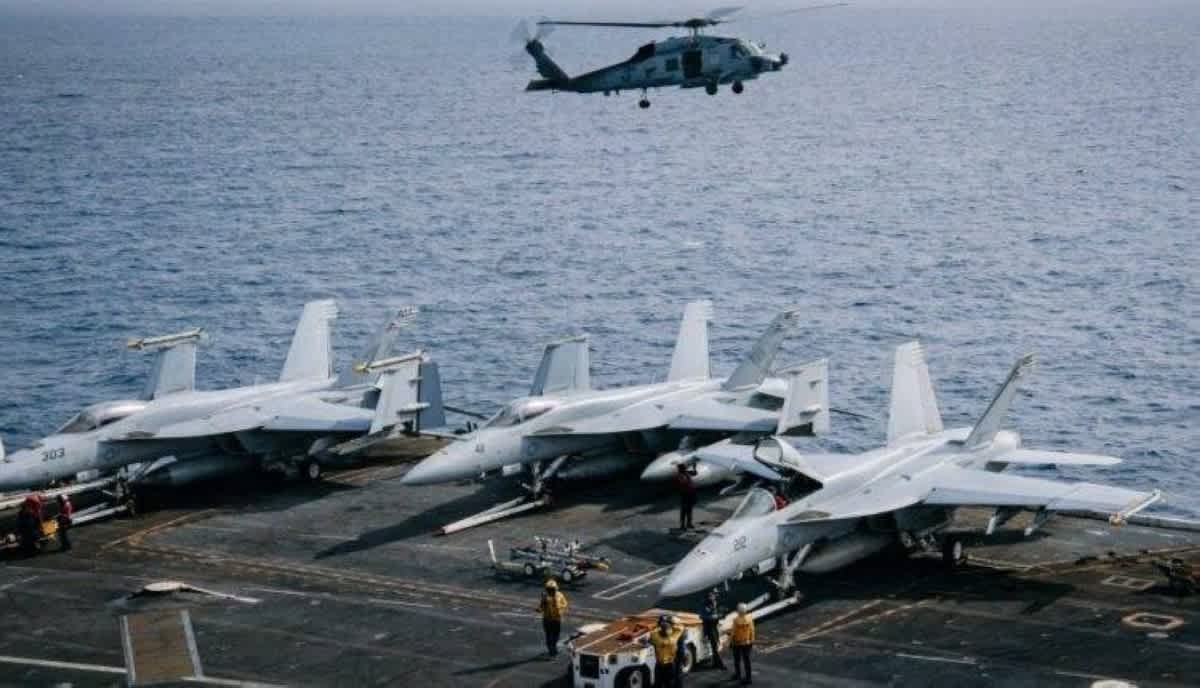
Most signs indicate that a military operation may begin in the near future. The U.S. has deployed over 50 fighter jets to bases in the Middle East. Military command is concentrating two aircraft carriers in the Persian Gulf. As for Israel, according to Channel 42, all emergency services have been warned about a possible conflict starting soon.
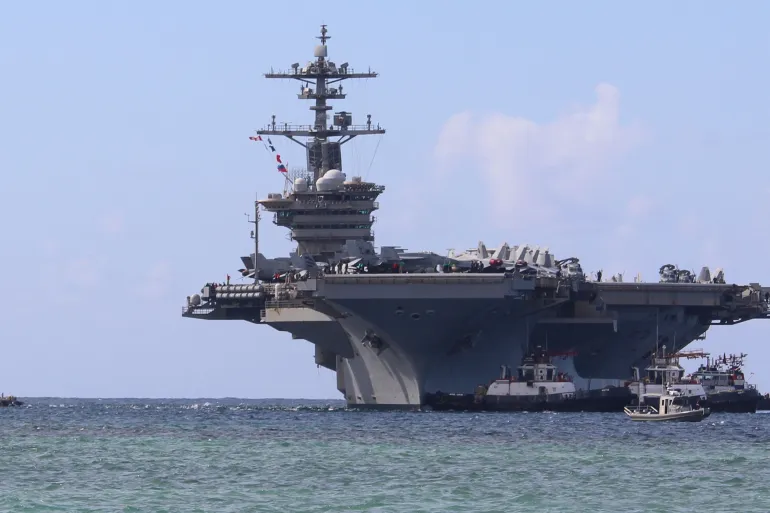
Tugs are bringing the aircraft carrier USS Abraham Lincoln to the U.S. base in Guam. December 11, 2025. Photo: Valery Mehu/US Navy (Al Jazeera)
How real is the threat?
On one hand, the concentration of forces in the Middle East is a worrying signal. However, it could also be a show of strength. The U.S. may try to pressure Iran using military threats to reach an agreement on the nuclear program. But it remains unclear whether the primary goal is actually to conclude a nuclear agreement with Iran or to attempt to overthrow the current regime in Iran led by Supreme Leader Khamenei.
How will Iran respond?
Khamenei has already promised a ‘crushing response.’ On February 19, Iran conducts joint exercises in the Gulf of Oman alongside China and Russia — a reaction to the redeployment of U.S. forces. They are practicing the liberation of ships, firing, and maneuvers.
According to GulfNews, Iran is strengthening its air defense: the army has received new long-range missiles, radars, and drones. But the main question is whether Iran's air defenses can repel attacks from the U.S. and its allies. In June, the majority of bombs and missiles hit their targets, but the exact number of interceptions remains unknown.
What we are certain of is that if an operation against Iran begins, it will respond with missile launches towards Israel. However, the IDF has likely already replenished its stocks of the Iron Dome and David's Sling, so it will be able to intercept most missiles. The extent of attacks on U.S. bases in the Middle East will depend on the scale of the operation.
When might it begin and how will it unfold?
Publications Axios, CNN, and others report, citing sources, that the U.S. operation could be larger than in June and include a ground component similar to Iraq. Our project, however, considers a full-scale ground operation unlikely. The U.S. may limit itself to raids to establish control over key infrastructure in Iran and compel negotiations.
Such an operation carries risks. The main one is the rapid mobilization of IRGC and Iranian military forces.
Many media outlets report that the operation will begin in the coming days. We assess the risk at 40%. In our opinion, it will not start before the Winter Olympics conclude — no earlier than February 22.
Subscribe
to our Telegram!
We publish only important
and verified information

 Russian
  English