![[sub]text](https://subtext-lab.com/wp-content/uploads/2026/01/white_transp-scaled.png)
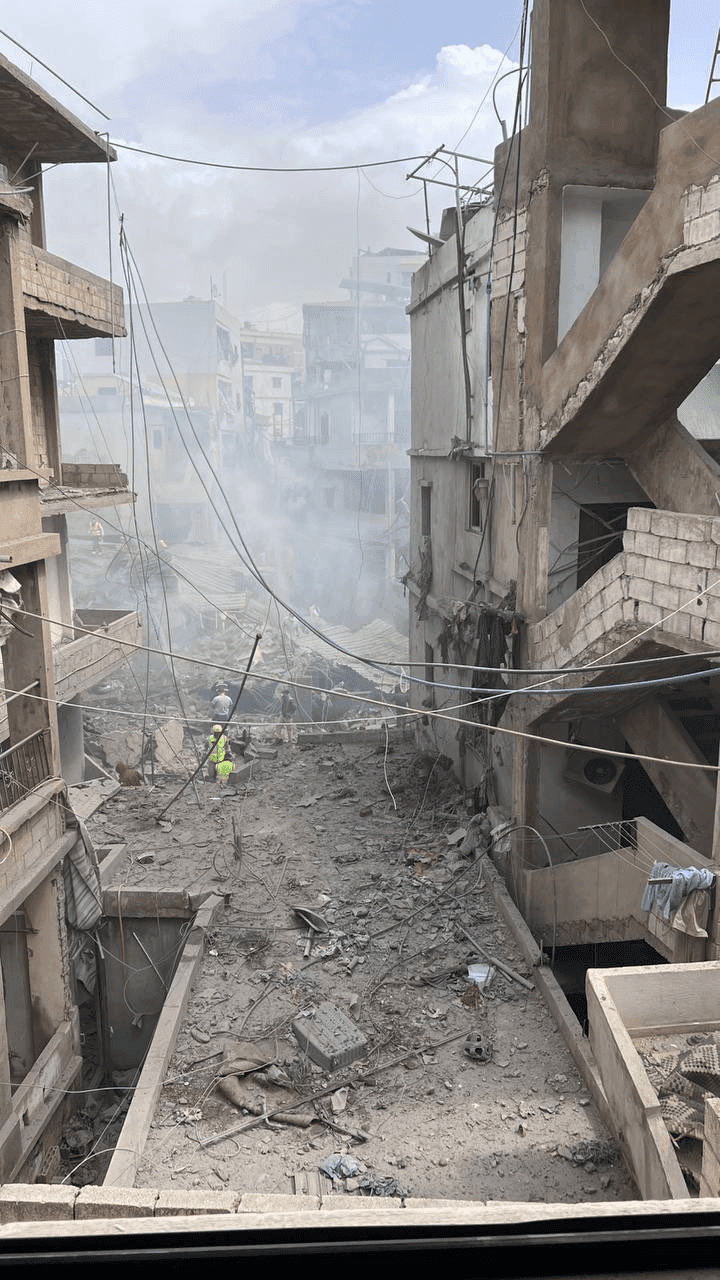
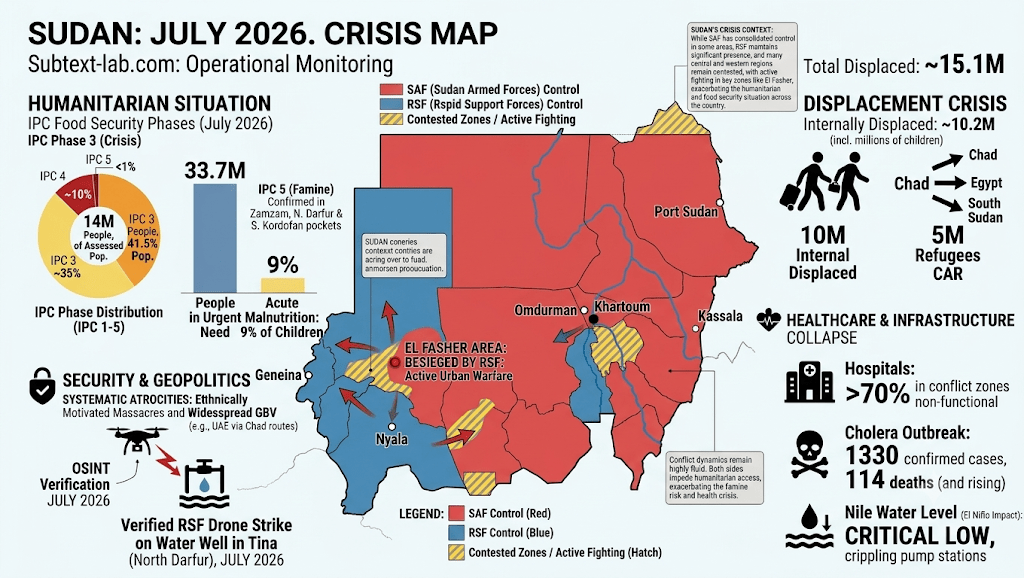
Combat actions continue in Sudan between the SAF and RSF, with Khartoum partially under army control, while the western regions and Darfur remain under RSF control. Infrastructure, hospitals, and water supply systems are destroyed, and drone strikes and blockades complicate civilians' lives.
The humanitarian crisis remains extremely severe: millions are in need of assistance, hunger has been recorded in certain areas, and mass population movements continue. Epidemics, lack of medicine, restrictions on aid access, and violence against civilians exacerbate the situation.
Sudan continues to experience one of the largest humanitarian crises of modern times. We have gathered everything known as of July 2026 regarding the humanitarian situation in the country. The previous study is available at the link.
What is happening now?
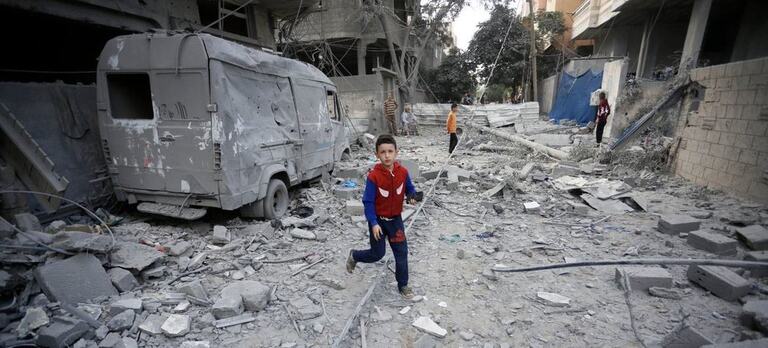
Clashes between the Sudanese Armed Forces (SAF) and the Rapid Support Forces (RSF) continue. By July, SAF managed to establish a foothold in the capital, Khartoum, and conduct limited raids to locate remaining RSF groups. The situation in the city remains extremely dire: residential areas, social facilities, and water and power supply infrastructure have been destroyed. RSF continues to strike targets within the capital using long-range drones. We note that drones are used indiscriminately, including attacks on civilian infrastructure.
In addition to the capital, SAF controls a large part of the central and eastern regions of the country. RSF holds a significant portion of the western territories — primarily Darfur and a large part of Kordofan. Large gold mines are concentrated in the west, which RSF uses as a source of income: mining is conducted using forced labor, with the gold sold on the black market. The final buyers are unknown, but it is likely that large Middle Eastern countries are among them.
Humanitarian Situation
The humanitarian situation in Sudan remains one of the most severe in the world. 33.7 million people are in urgent need of assistance. About 20 million are currently in phase IPC 3 — this is the level of food crisis when families face high levels of malnutrition, are forced to sell belongings, or drastically reduce their diet. 9% of children are suffering from acute malnutrition.
Hunger (IPC 5) reported in the areas of North Darfur and South Kordofan. This phase is characterized by a lack of access to food, high risk of infections, and mortality. Up to 30% of children in these areas are in a state of extreme malnutrition.
The situation is particularly severe in El Fasher, which is under RSF control. To capture the city, RSF employed siege tactics: blocking roads, water stations, shelling humanitarian convoys, and striking civilian infrastructure. As a result, remaining residents lost access to food and water, leading the area into IPC Phase 5.
Population displacement
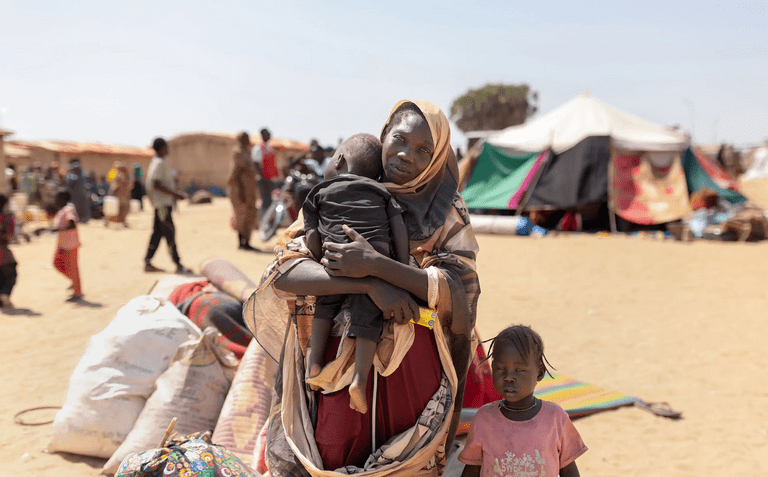
About 10 million people are considered internally displaced persons. Many experience repeated displacement — being forced to leave one camp and search for another due to the advancing front. In such conditions, people lose the ability to earn an income and meet basic needs. Children do not have access to education and are forced to help adults in search of food.
A separate issue is the control of the camps. In several areas, the camps IDPs are under the control of SAF or RSF, which hinders access for UN personnel and humanitarian organizations.
About 5 million people crossed the border, mainly heading to Chad and other neighboring countries.
Healthcare
Most hospitals in Darfur, Kordofan, and Khartoum are not operational. There are two reasons: facilities are either destroyed or occupied by armed groups; in the surviving locations, there is a lack of medical personnel.
A separate threat is posed by epidemics. In Sudan reported a new outbreak of cholera: confirmed 1330 cases and 114 fatalities. WHO cannot ensure the delivery of medicines to besieged areas due to obstacles from RSF and SAF.
Civilian security
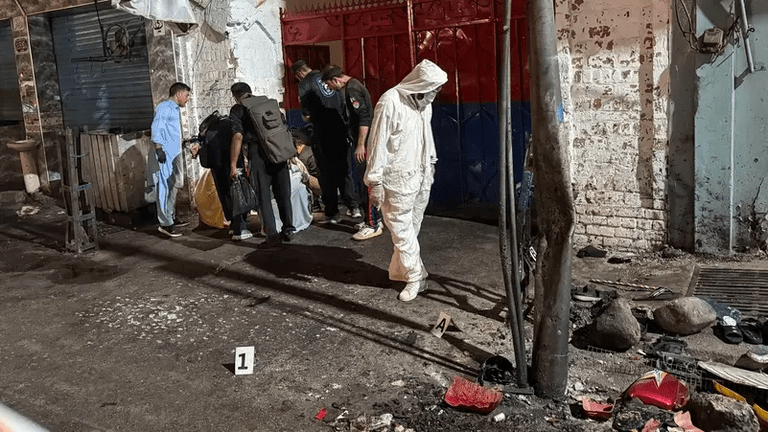
Civilians are systematically subjected to violence from armed groups. Mass killings and ethnically motivated attacks have become a persistent pattern. Of particular concern is the use of drones: we have verified a drone strike near a water source (well) that was used by residents and livestock. There are fatalities, including animals. The incident occurred in Tina province in North Darfur.
Another serious issue remains limited mobility. Most surviving roads have checkpoints set up by both sides, making it almost impossible to exit the region.
Instead of a conclusion
Sudan remains at a critical point. The situation is exacerbated by the consequences of the climatic phenomenon El Niño: in July, there was a sharp drop in the level of the Nile, worsening the crisis against the backdrop of destroyed water infrastructure. Urgent measures are needed to stabilize the situation. Simply sending humanitarian aid is insufficient. Only international intervention can save the civilian population and bring about a ceasefire. For this, external actors must cease their support for the conflicting sides, pursuing their own economic interests.
We will continue to monitor the situation.
We are on social media
In addition to our website, we have social media. We run Telegram in Russian and Bluesky in English.
We remain an independent analytical project; we need your support — subscribe!

 Russian
  English