
Despite the military actions against Iran, Israel continues to increase pressure in southern Lebanon to push 'Hezbollah' further from the borders and attempt to create a certain buffer zone.
What is happening now?
Israel is carrying out massive strikes on cities and villages in Lebanon and is also using ground forces — mostly elite units — to establish control over both infrastructure and a number of settlements. Israeli ground forces have advanced up to 8 km into Lebanon. This may indicate that the Israel Defense Forces are preparing to establish more substantial control over the border than previously stated.
However, Israeli military forces are facing resistance from 'Hezbollah'. We have been able to verify drone launches, the firing of anti-tank guided missiles, as well as strikes on the locations of Israeli military personnel in Lebanese villages. 'Hezbollah' is also using weaponry that had not previously been recorded — reactive drones. Similar models were observed in Iran at the beginning of the war, which may indicate ongoing arms supplies.
At the same time, Israel continues to strike cities and villages, primarily in Beirut and southern Lebanon. Moreover, the strikes are expanding deeper. From April 1 to 6, Kfar Hatta and Jezzine, located about 50 km from the Israeli border, were affected. There were also strikes on the southern suburb of Beirut.
Israeli officials claim that the strikes target only 'Hezbollah' infrastructure; however, actual data shows that civilian infrastructure — from small villages to large districts in suburban Beirut — is also being affected. The scale of destruction in several settlements suggests the use of scorched earth tactics, leading to significant damage to residential homes and essential life-support infrastructure.
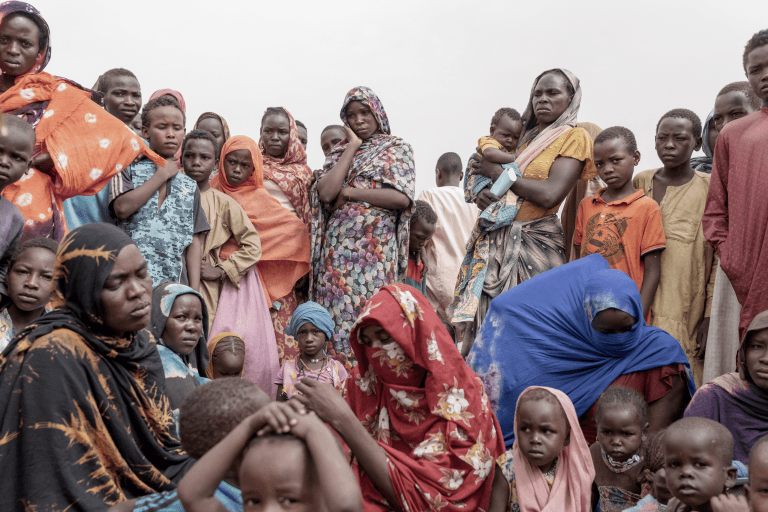
This is confirmed by the statement from Israeli Defense Minister Yoav Gallant, who said that Israel will destroy homes and villages along the border to create a buffer zone 'modeled after Gaza'. Such a decision could lead to a massive humanitarian crisis: displaced persons will unable to return home and will be forced to stay in overcrowded accommodation centers or on the streets of major cities. Given Lebanon's limited resources, this creates a serious burden on state structures. Concerns are also raised about the behavior of 'Hezbollah'. There is a high likelihood that the organization uses civilian infrastructure for shelter and camouflage, which further increases risks for the civilian population.
Actions of 'Hezbollah'
'Hezbollah' is actively shelling northern Israel, using a combination of drones and rockets. On April 4 the organization launched over 100 rockets at northern Israel; sirens were heard even in Tel Aviv. This was the largest launch from 'Hezbollah' since the start of the war. We are observing signs that 'Hezbollah's actions may be coordinated with Iran: since the beginning of March, combined attacks have been recorded. The likely goal is strain on Israel's air defense system, rather than pinpoint strikes on infrastructure.
Risks for the civilian population
The main risks are the destruction of civilian infrastructure, including agriculture and housing. All of this may lead to uncontrolled internal migration to Beirut and its suburbs. We do not rule out that in light of strikes on civilian facilities, support for 'Hezbollah' in Lebanon may increase.
According to the UN, strikes in the Bashura area in the southern suburb of Beirut have led to the destruction of residential buildings and numerous casualties. Over 1.2 million people have become internally displaced. Since March 2, 2026 more than 1247 people, several thousand have been injured — these figures are preliminary.
As mentioned above, there is a possibility that the Lebanese authorities will not be able to cope with such a serious challenge, especially considering that international assistance is minimal or significantly reduced.
On the one hand, Israel may have hoped that pressure on southern Lebanon would lead to attempts to disarm 'Hezbollah'. However, the opposite effect is also possible. Currently, 'Hezbollah' is the largest and most capable armed group in Lebanon. So far, there are no confirmations of active confrontation from the Lebanese army. All these factors could increase support for 'Hezbollah', especially among the Shiite population, who may view it as a force capable of providing protection. This creates risks for internal security and stability.
Risks for Israel
There are also risks for Israel. As we understand it, military leadership hopes to create a buffer zone in Lebanon and possibly take control of the area up to the Litani River. These actions are dictated pragmatically — to push 'Hezbollah' beyond the Litani, reduce its combat potential, and decrease the likelihood of new shelling. To achieve these goals, Israel is using limited ground forces, which are supported by aviation and artillery. First, aviation and artillery 'clear the way' by destroying settlements, and only after that ground troops advance. Direct confrontations with 'Hezbollah' are rarely recorded. Given the dynamics, Israel may be considering an expansion of operations in Lebanon. This creates the risk of escalation and increased casualties among military personnel, which could impact the internal ratings of military leadership and lead to destabilization within the country.
Humanitarian perspective
In any conflict, it is essential to minimize strikes on civilian objects and the civilian population. Currently, another humanitarian crisis is forming in the Middle East. The Gaza Strip remains unresolved, and judging by the dynamics, the crisis in Lebanon will also deepen. Our project will monitor the situation.
In conclusion
We are an independent project. Our goal is to investigate and analyze security issues.
We are not simply responding to changing conditions that affect our activities. We want to stay connected even under a complete internet blackout. Please subscribe to our newsletter below.

 Russian
  English