
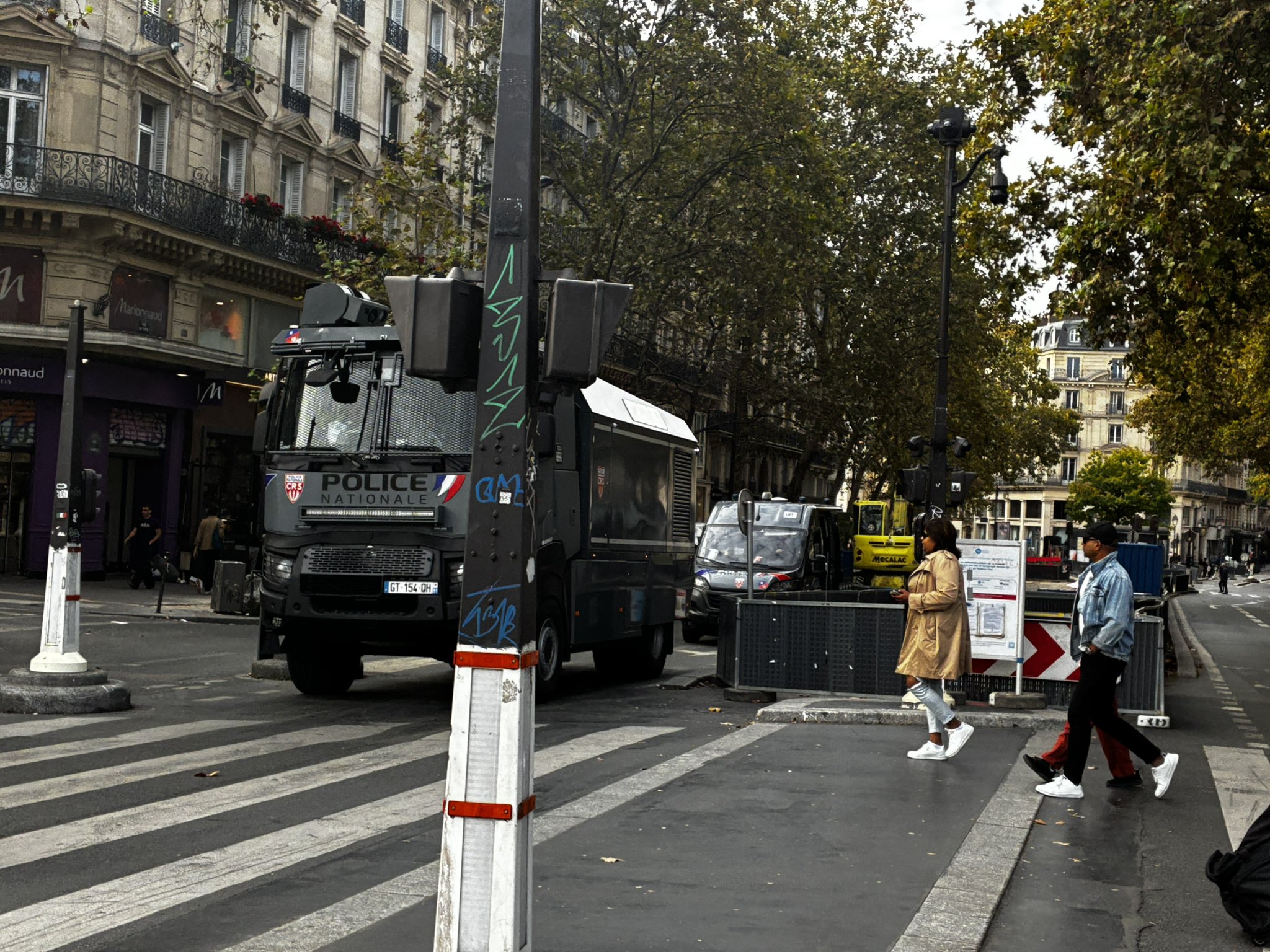
Protests by high school students and college students dissatisfied with the conditions of education have been ongoing in France for several weeks. A general mobilization day will take place on October 6. Teacher unions and other organizations will join the protesters.
What caused them to start
We believe that the discontent that led to protests and riots had a cumulative effect. There are over 3,200 vacant teaching positions in the country. It is important to understand that the number of candidates for these positions has been decreasing for several years.
For students, this was not an abstract but a very real problem. The lack of staff leads to classes being canceled due to the absence of teachers, including for important subjects that are part of the final exams. Thus, the educational process was largely slowed down, causing anxiety among students.
In addition to the lack of teachers, many students complained about the shortage of additional staff: nurses, social workers, and technical specialists who could maintain the proper condition of educational buildings. On October 2, students from several high schools in the city of Vitry-sur-Seine published a series of testimonies. In particular, they reported broken toilets, damaged walls, overly hot classrooms, and other issues.
A separate source of discontent has been the Parcoursup system. This is the application system for higher education institutions. Protesters consider it opaque and psychologically burdensome for graduates. Some participants in the protests are demanding its abolition.
Why did the protests start now?
We are confident that the protests that began arose spontaneously. No organization or union had previously announced plans for their conduct. Euronews indicates that the protests may have started at the Saint-Exupéry high school in Créteil when students joined the teachers' strike. After that, a chain reaction began. Students published posts on social media that received widespread support. As a result, more and more educational institutions joined the demands of the protesters, and their students began to participate in the actions.
What is happening now?
As of the morning of October 6 it is known, that disruptions to the educational process have affected 589 out of 3,700 high schools. There were also reports of protests at 32 universities.
At the same time, it is important to understand that the protests also have a violent nature. Violence is used by both protesters and police officers, who in some cases use excessive force. One of the most severe situations is observed in Paris and Lyon. Protesters block entrances to high schools with garbage bins, subsequently setting them on fire, shoot fireworks, and throw Molotov cocktails at law enforcement. They also frequently engage in direct confrontations with the police.
Separate cases of looting and damage to property of residents and businesses are recorded. This means that the protests have clearly gone beyond peaceful actions. As evidence, we will post several videos.
Detainees and injured
About 5060 people have been placed under police custody, of which 4406, or 87%, are minors. Criminal proceedings are underway against 1802 individuals. Among the injured are 715 police officers, 215 students, and 85 education workers. We emphasize that this is official statistics, not an independent assessment.
We also want to note that police officers are using excessive force to suppress the protests. Some of the injured have sustained serious injuries.
What will happen next
We observe a certain trend among teenagers in many countries around the world, namely a rise in dissatisfaction with the current political elites. The memories of the «social media revolution» in Nepal, when protesters achieved their goals, are still fresh. This can be seen as one of the first reference points in the changing political reality. In Germany, student strikes against conscription are also taking place.
We believe that this could be the beginning of fundamental changes both in Europe and in many other progressive countries. It is important to listen to the younger generation. Teenagers are already a vulnerable category of the population, as confirmed by a number of our studies. However, violence against teenagers can lead to even greater violence.
It is worth noting that many right-wing populists and organizations are using the current situation to gain political points. On Twitter, right-wing activists post photos of the riots and claim that France has supposedly fallen. Some far-right commentators assert that only migrants are participating in the riots. At the same time, they demand stricter immigration legislation. However, this is populism and the use of the situation for political purposes ahead of the upcoming elections.

 Russian
 English