![[sub]text](https://subtext-lab.com/wp-content/uploads/2026/01/white_transp-scaled.png)
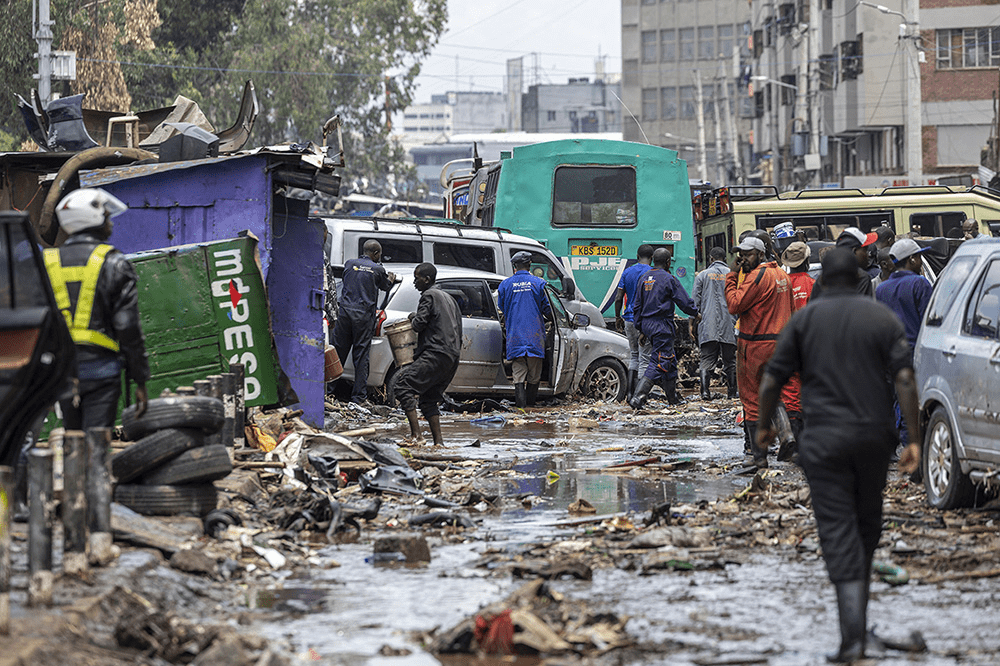
The monthly monitoring report describes climate anomalies in Africa from March to July 2026. Different regions of the continent are experiencing heavy rains, flash floods, heat, and drought, especially in East and Southern Africa, the Sahel, North, and Central Africa.
The material links these shocks to deteriorating food security, crop loss, internal migration, and increasing social tension. It specifically notes the risk of increased activity from criminal and extremist groups amid resource shortages and weakened local institutions.
Updates
June – July 2026
June–July 2026 has been marked by contrasting climate anomalies: in some regions of Africa, destructive rains and flash floods are recorded, while in others, drought and precipitation deficits are intensifying.
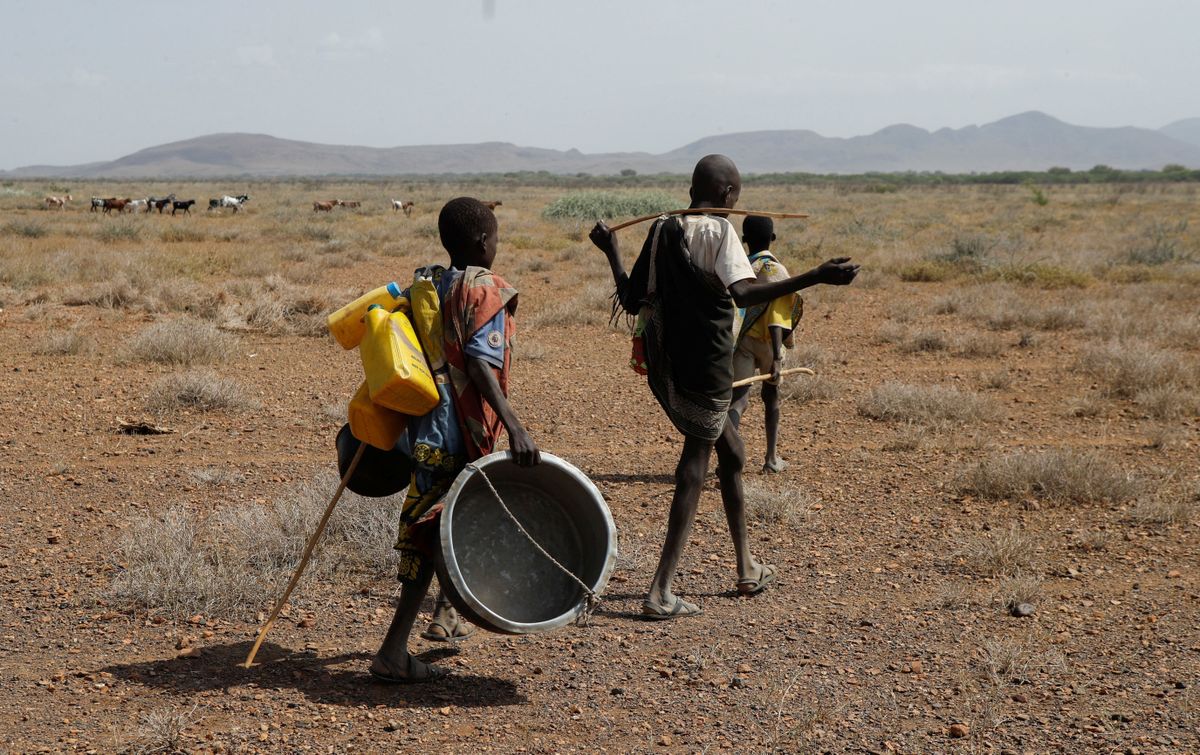
These processes are already leading to worsening food security, increased internal migration, and heightened social tension, creating conditions that may be exploited by criminal and extremist groups.
Climate challenges in Africa continue to intensify. They manifest differently in various parts of the continent — from abnormal droughts to flash floods. The cause is ongoing global warming and the El Niño weather phenomenon.
Many countries in the region are already facing food security issues and escalating internal climate migration. Under the current circumstances, food availability will decline, and migration from rural areas to cities will increase, further complicating the harvest situation. It is important to note that such challenges create risks of social tension and conditions for the infiltration of criminal groups, including terrorist organizations that may attempt to exploit the situation, including to recruit new members.
Below is a detailed analysis of climate anomalies.
East Africa: Drought continues to expand
Over the last 30 days in northern, central, southwestern, and eastern Ethiopia, northern Eritrea, South Sudan, eastern CAR, northeastern DRC, Uganda, and western Kenya, there has been a prolonged precipitation deficit. According to NOAA, the deficit can reach up to 80% from the norm — about 100–200 mm over the period.
In Uganda, western Kenya, and a significant part of Ethiopia, abnormal heat is forecasted — exceeding +35 °C. In July, the temperature in Uganda and Ethiopia usually ranges from 18–26 °C, so +35 °C — this is extreme heat, especially considering that most of East Africa is currently experiencing climatic winter.
These factors worsen the condition of pastures and complicate agricultural practices in general.
West Africa and the Gulf of Guinea: Excessive rainfall and flash floods
In West Africa, there is a heterogeneous situation depending on the country and region. On the coast, heavy rains and downpours are prevalent, leading to an increased risk of flooding in Nigeria, Guinea, and Liberia. In some regions, including southern Mali and eastern Nigeria, there is, conversely, a lack of precipitation — only 55% from the norm.
This is the climate shock: flooding on the coast and precipitation deficits inland.
This situation may complicate agricultural practices and force farmers to seek regions with more suitable rainfall levels. On the coast, the problem of flooding and inundation of settlements will intensify.
Sahel: 'not record-breaking,' but dangerous heat and moisture deficit
In the Sahel region, no temperature records have been broken, but consistently high temperatures have been established — around +35 °C. Precipitation is only 50% from the norm. This exacerbates the condition of already damaged soil. At such temperatures, precipitation evaporates quickly, preventing the soil from soaking up moisture, leading to its deficit. Crops die quickly under such conditions.
North Africa and Southern Africa
Extreme heat has settled along the Mediterranean coast. In Morocco, Algeria, and Tunisia, temperatures hover around +40 °C. In the medium term, this creates an increased burden on irrigation systems and could lead to drying up water resources or lowering water levels.
In the southern part of Southern Africa, episodes of heavy rain are occurring — about 100 mm of precipitation can fall in a single day. This leads to localized flooding and rising river levels, which, when overflowing, can flood settlements. A similar situation was observed in April in South Africa, when some areas of Cape Town were flooded.
In Madagascar, on the other hand, drought continues, exacerbating the food crisis. Internal reserves are nearly exhausted.
Consequences
We divide the consequences into short-term and medium-term.
Short-term consequences
The short-term consequences of climate anomalies in the region are directly linked to deteriorating food security, declining yield, and increasing internal migration.. In several countries, there is already a shortage of fresh water and food, which increases pressure on rural communities and prompts displacement to more stable areas.
Medium-term consequences
Medium-term consequences include an increase in crime rates, rising social tensions, and potential local upheavals. The increase in migration to cities and densely populated areas raises the risk of resource conflicts, especially over water and food.
We separately note the increased activity of destructive elements — criminal and terrorist groups that seek to exploit the vulnerability of the population. In conditions of resource shortages, destruction of traditional livelihoods, and weakening of local institutions, such groups gain the opportunity to expand their influence and recruit new members, especially among the youth and displaced communities.
These processes will be examined in detail in a separate study.
April 2026
In April 2026, Eastern and Southern Africa faced abnormal rainfall, even for the rainy season.
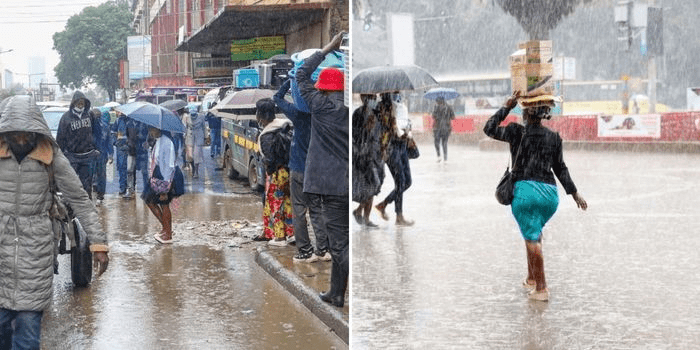
In Kenya, there were mass floods, and in South Africa and Somalia, devastating downpours. Meanwhile, other regions and countries are experiencing drought. Africa is approaching the onset of a dry summer and climatic anomalies.
Kenya
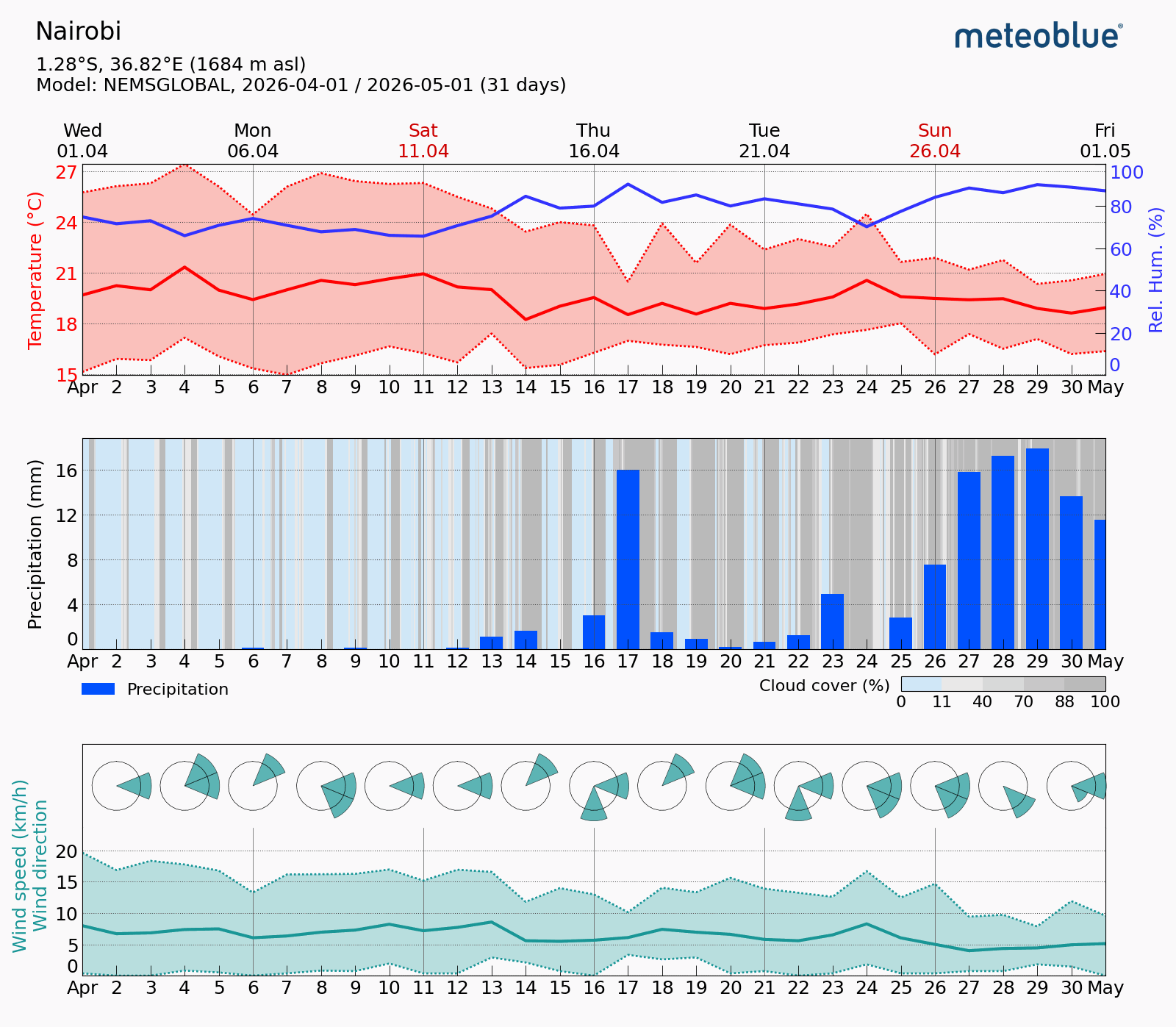
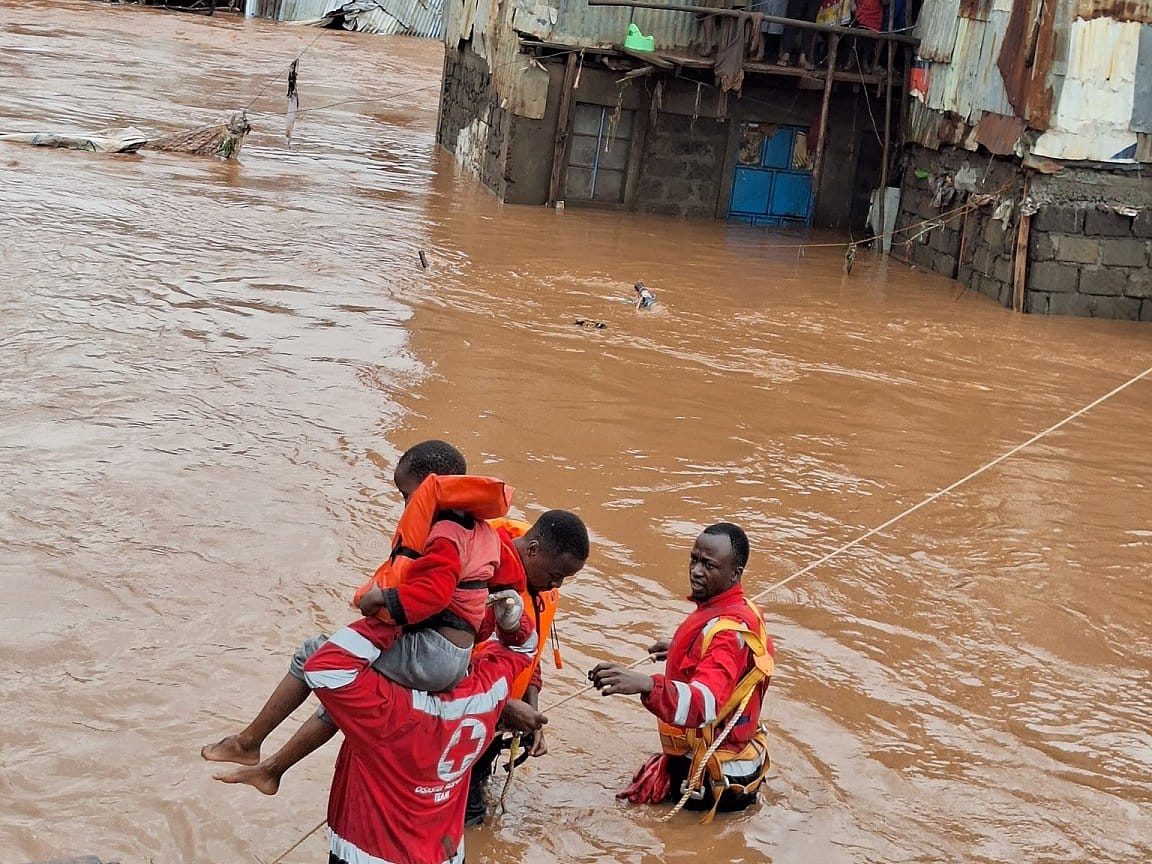
Since April 20, heavy rains have continued in Kenya. In several districts, 20–50 mm of precipitation has fallen daily, which is 2–4 times above normal. As a result, dozens of districts have suffered from flooding, including the capital Nairobi. The rainfall is causing so-called flash floods: due to the large volume of water, a temporary uncontrolled flood occurs, making timely evacuation impossible.
As of April, more than a hundred people have died, around 68,000 have been forced to leave their homes, and the number of those affected by flooding is estimated at over 200,000. Dozens of bridges have been destroyed, power lines damaged, and residential areas and farmland flooded.
In the suburbs of Nairobi, key highways linking the capital with the southern and eastern parts of the country have been washed away, disrupting transport and food supplies. It is forecasted that heavy rains will continue into early May.
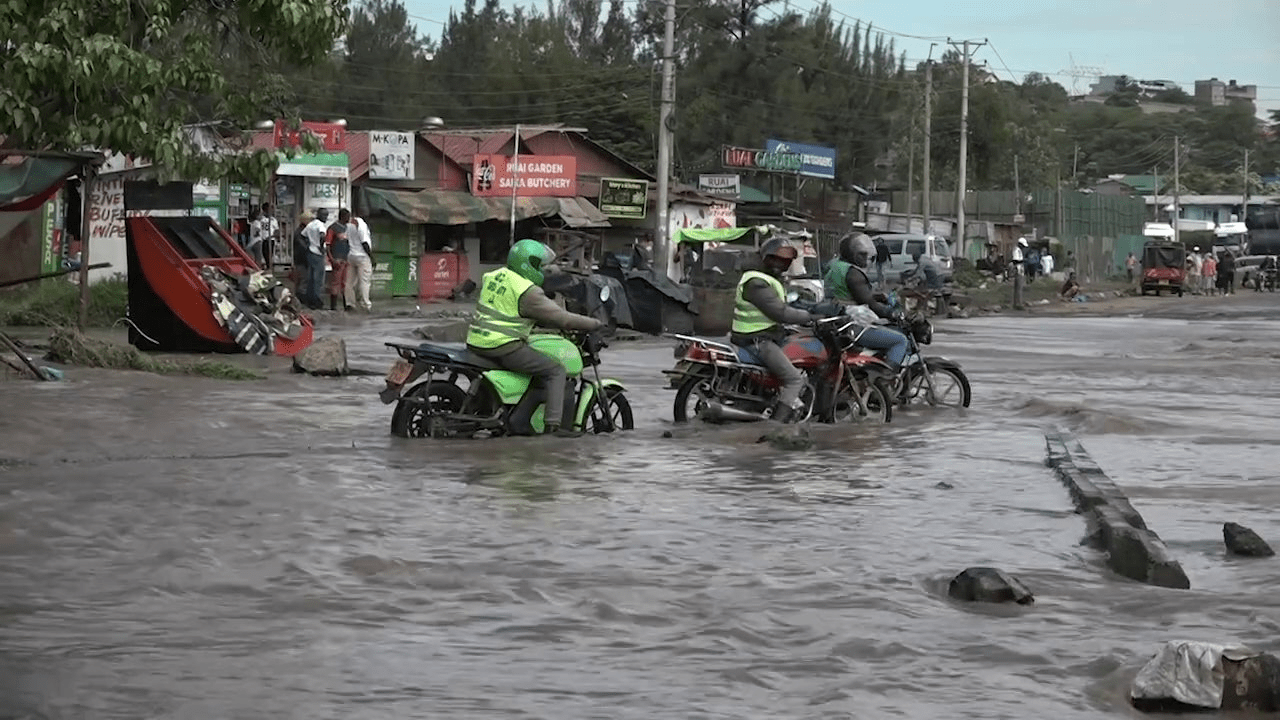
The cause of the flooding lies not only in the heavy rains but also in the fact that Kenya's infrastructure is in critical condition. In Nairobi and other cities, there is a lack of a developed drainage system, which means there is nowhere for the rainwater to go. As climate conditions worsen, the situation will only get worse, and the damage from such events will increase.
Somalia
Somalia continues to experience a dual climate anomaly. The country is facing both local flooding and drought. In some areas of the northwest and coastal regions, intense rainfall continues, leading to inundation. At the end of April, over 4,000 people were displaced due to a single flooding event.
Conversely, in the central part, drought has set in: rainfall deficit reaches 40%. This will contribute to a worsening humanitarian situation and food security. In drought-affected areas, water shortages complicate agricultural practices. As a result, livestock deaths and food shortages can be expected, as well as an increase in dependence on humanitarian aid.
South Africa
South Africa, like Kenya, is facing heavy rains. The monthly norm in some regions fell in just five days. Torrential rains are causing flooding in areas of Cape Town and other coastal cities. The high saturation of the soil is leading to landslides in mountainous and coastal areas.
In several provinces, road, bridge, and residential house damage has been reported, and thousands of people are temporarily leaving their homes due to flooding. However, there is no extreme heat in the country — the region is entering the winter season, and the main risk is associated with rainfall and landslides, not temperature.
Central and Western Africa
In central and western Africa, a prolonged drought has been observed. The situation is particularly alarming in the Democratic Republic of Congo and Angola. The rainfall deficit can reach up to 50% of the monthly norm. This is causing the drying up of water resources, including small rivers and seasonal bodies of water. In certain areas, there is a noticeable decrease in the flow levels of major rivers and a reduction in the water volume in small lakes and ponds used for irrigation and watering.
Specific concerns are raised by forest and savanna fires, including outbreaks in arid regions and at the borders of forested areas. In some provinces of the DRC and Angola, the number of thermal anomalies (fire hotspots based on satellite data) in April exceeds the average of recent years. Fires are increasing the migration of wildlife, and the drying up of water resources is affecting fishing, which also poses a threat to food security and the income of local communities.
Madagascar and the Sahel region
April in the Sahel saw no record temperatures: the average temperature was around +35 degrees. But even without extreme warming, the soil is already degraded, and chronic water shortages are increasing evaporation and reducing moisture available for agriculture. Combined with population growth and pressure on pastures, this increases the risk of further land degradation and resource conflicts.
Madagascar is in a similar situation, experiencing the worst drought in recent years. The rainfall deficit reaches 70%, with temperatures approximately 1 degree above normal. The consequences are severe: a significant part of the cassava and corn harvest has been lost, with serious losses also reported for other crops in certain areas. It is possible that in the coming months, the country will require humanitarian assistance, including food support and water supply programs.
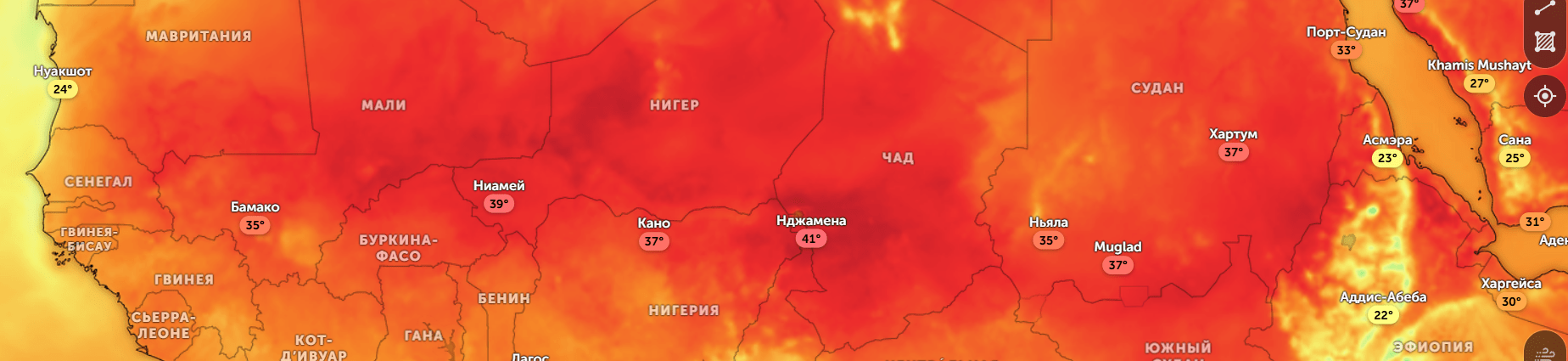
Source: Zoom Earth
Conclusions
April 2026 became a month of climatic contrasts. Eastern and Southern Africa faced torrential rains and flooding, while Madagascar and Central Africa demonstrated a consistent trend of prolonged droughts. The primary danger is food shortages and climate-induced migration, which will lead to overcrowding in cities and potential conflicts.
We update monitoring at the end of each month.
March 2026
Africa is one of the most vulnerable regions in the world to climate change. March marks a turning point in the climate period for most African countries.
Eastern and Southern Africa are entering the season of long rains and flooding, while the Sahel and North Africa face extreme heat, drought, and dust storms. Climate shocks increase internal migration and economic losses.
Eastern and Southern Africa: rainy season and flooding
In Eastern Africa, the long rainy season begins, lasting from March to May. ICPAC forecasts show a 45% likelihood of above-normal precipitation. Torrential rains are expected in Uganda, Rwanda, Burundi, Tanzania, Kenya, Ethiopia, South Sudan, northern Somalia, and Djibouti.
Along with torrential rains, there is a risk of flooding and landslides since precipitation will fall on parched soil due to drought. In December 2025 and January 2026, Southern Africa experienced some of the most severe floods in its history. Over 10 days, the annual norm of rainfall fell. As a result of the flooding in South Africa, Mozambique, and Zimbabwe, over 300,000 people became internally displaced.
Overall, climatic conditions are intensifying internal migration, along with an increase in tension.
At the beginning of the year, the first record was broken
Sahel and North Africa: heat, drought, and dust storms
Alongside heavy rains in East Africa, extreme temperatures and drought are expected in the Sahel and North Africa. Dust storms may also intensify. According to the WMO, African countries are already losing between 2 to 5% of GDP due to climate change.
Economic implications and project monitoring
Many climate models indicate that most African countries will face climate shocks, shifting from heavy rainfall to extreme heat and droughts. The project team is launching a monitoring system for climate changes in Africa, with updates monthly.
This material is part of a series of monthly monitoring reports on climate change in Africa.

 Russian
  English